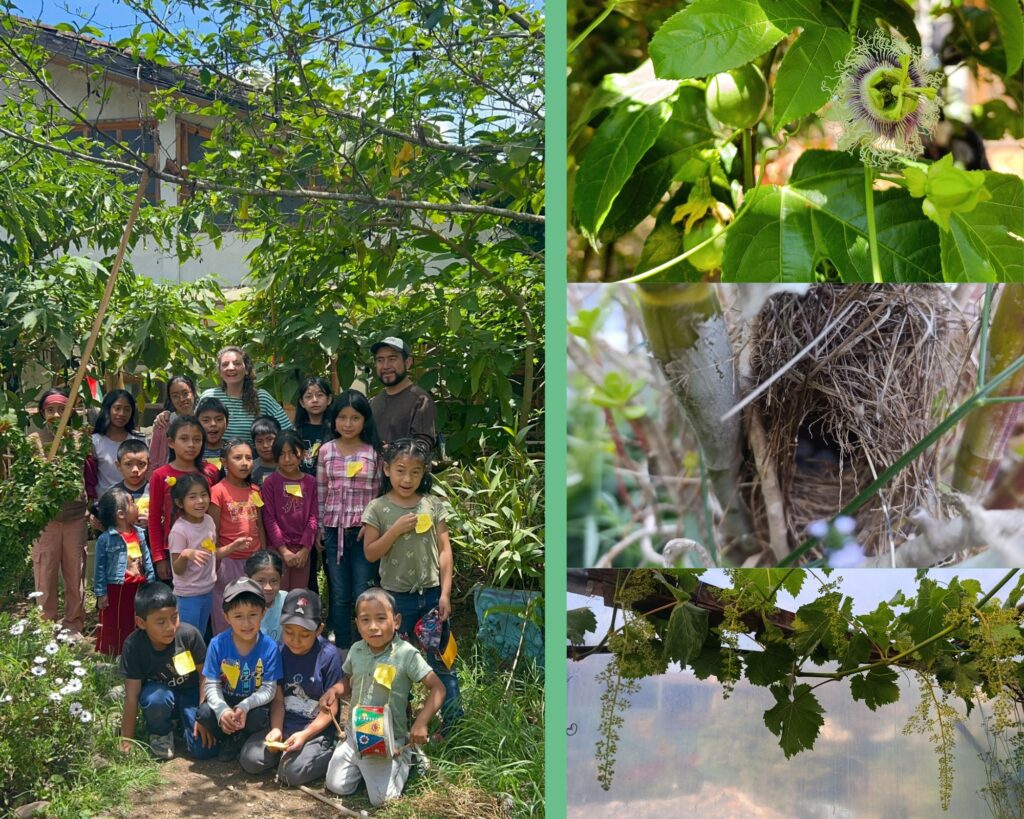
May at Casagua has brought new neighbours; the noisy southern house wren (troglodytes musculus) family has chicks, as do the fourth or fifth generation of yellow-faced grassquits (tiaris olivaceus) who have shared the garden with us over the years. The wrens’ hungry chorus reaches us from their cosy nest at one end of a bamboo pole in the treehouse terrace that Checha built last year. Their name is a testament to the ancient Greek for cave-dwellers or troglodytes and the musculus variety is found throughout all of Central and South America.
The grassquit is described on the Merlin bird app as a “very small bird of grassy and weedy areas in tropical and subtropical areas” and belongs exclusively to Central America and the Caribbean, with a swathe of habitat in Pacific Colombia. They are a striking olive green with a black and yellow band around the eye and their nest is an architectural marvel balanced between the orchid stems.
As the birds dart and dive and trill, the flowers are bursting open, the tomatoes, peaches, aubergines and passionfruit are ripening and the first grapes are burgeoning in the greenhouse. In mid-April, we sowed 25 different vegetable and herb varieties in one 8 metre squared patch in our garden.
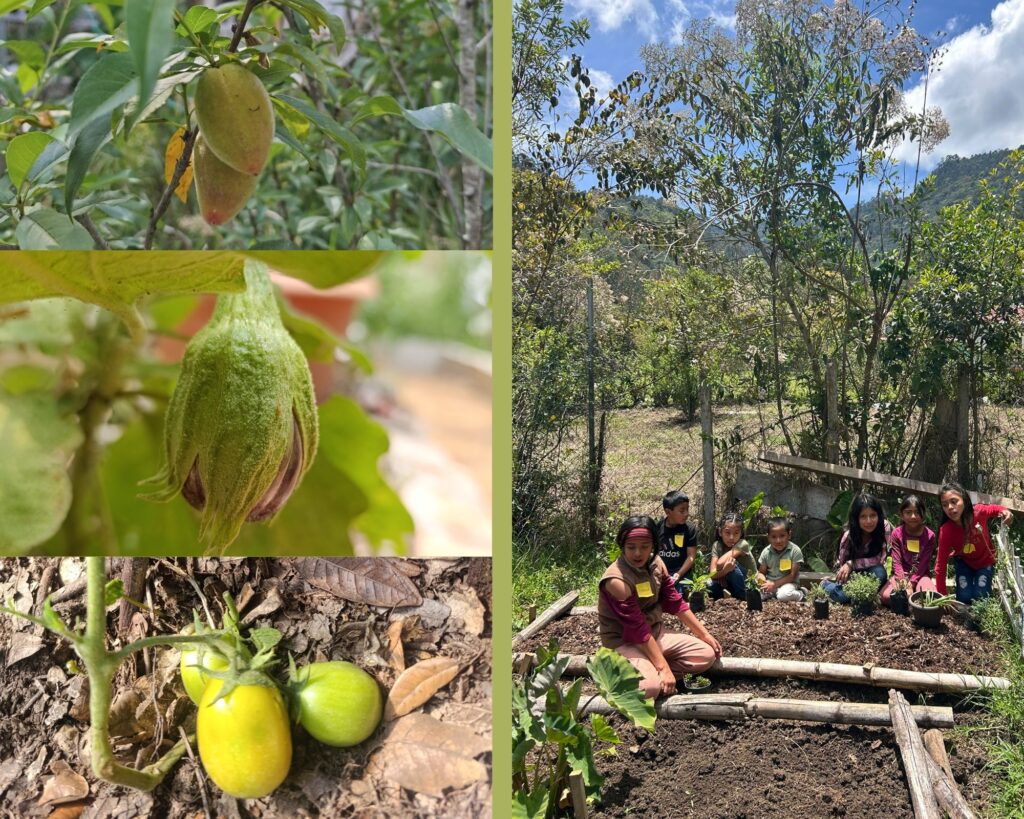
We implemented syntropic agriculture techniques that we learned with Brazilian expert, Nat Muguet, near Guatemala City last year. This inspiring agroforestry method is a high density, high diversity multi-layered planting system, putting into practice a botanical polyculture of mutual reciprocity that regenerates the soil.
In our children’s workshops, one of the words we repeat with them every week is biodiversity. In our growing library of 100+ children’s books, we focus on nature’s cycles and read stories about jungles and forests and deserts. We are now beginning to create a play, developing animal characters that reflect the diversity of the mountains that surround us here in Guatemala’s north-western highlands. When the children come, we form a circle and use maracas, drums, ukulele and marimba to create the sounds of coyotes, woodpeckers, wild boar and bees.
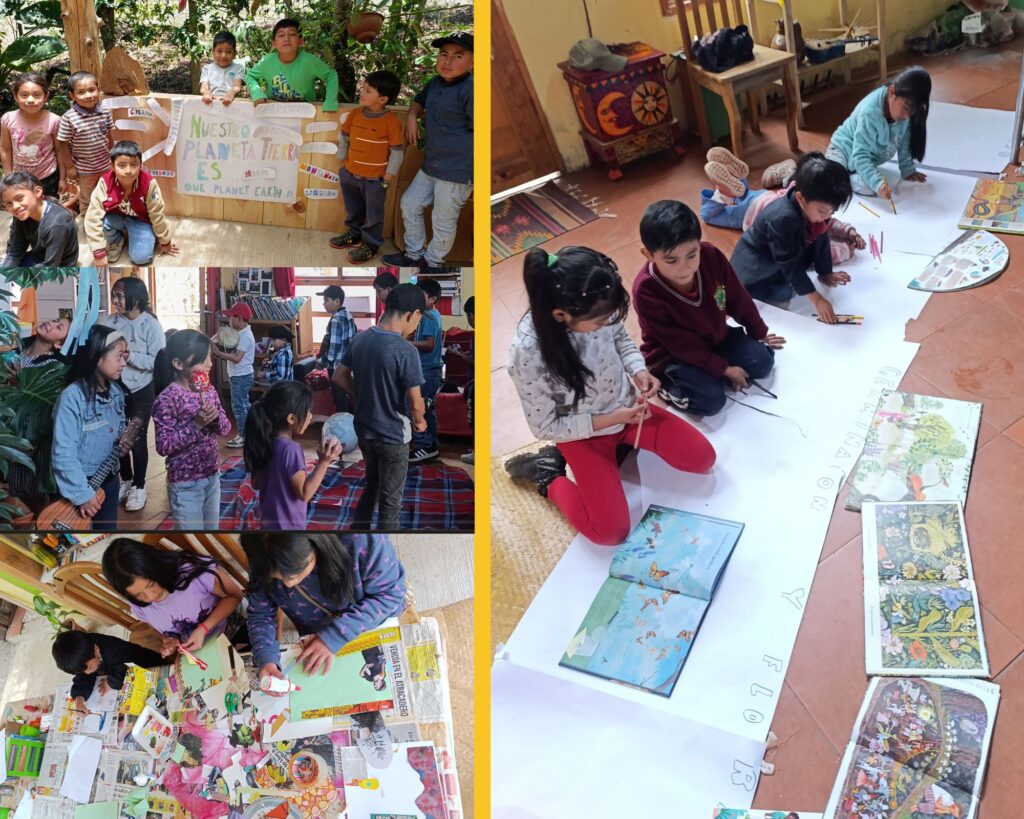
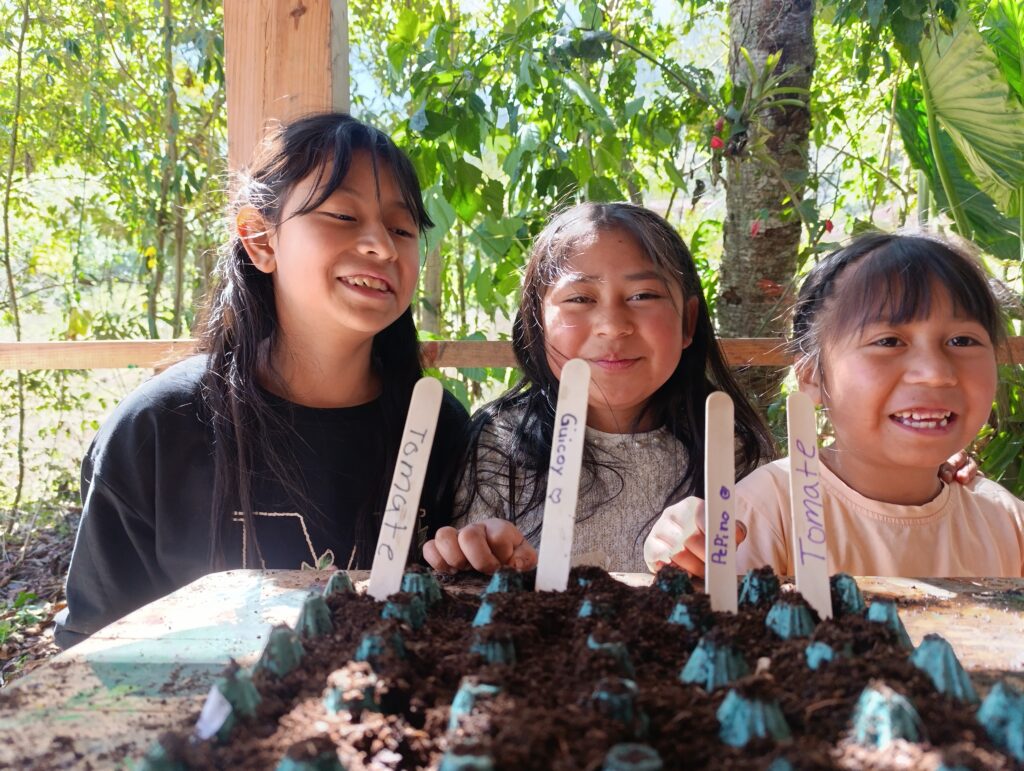
It’s been exactly four months since we started up with our 2026 workshops and we now have a regular group of 35 girls and boys who come to Casagua every Saturday to play games and instruments, plant seeds, make art, learn about nature and read books in the garden.
Honestly, it’s hard to summarise the joy and creativity of these past four months.
We feel so lucky and grateful that we’ve been able to share Casagua’s colour and abundance with our dear friends Isadora and Ruby, who came to visit us from Brazil and Scotland. Isadora accompanied our first workshop of the year back in January and in February, Ruby arrived with her expertise in theatre and music education, bringing to Maya Ixil children the storyplay methodology currently inspiring refugee and newcomer children in Glasgow with Licketyspit.
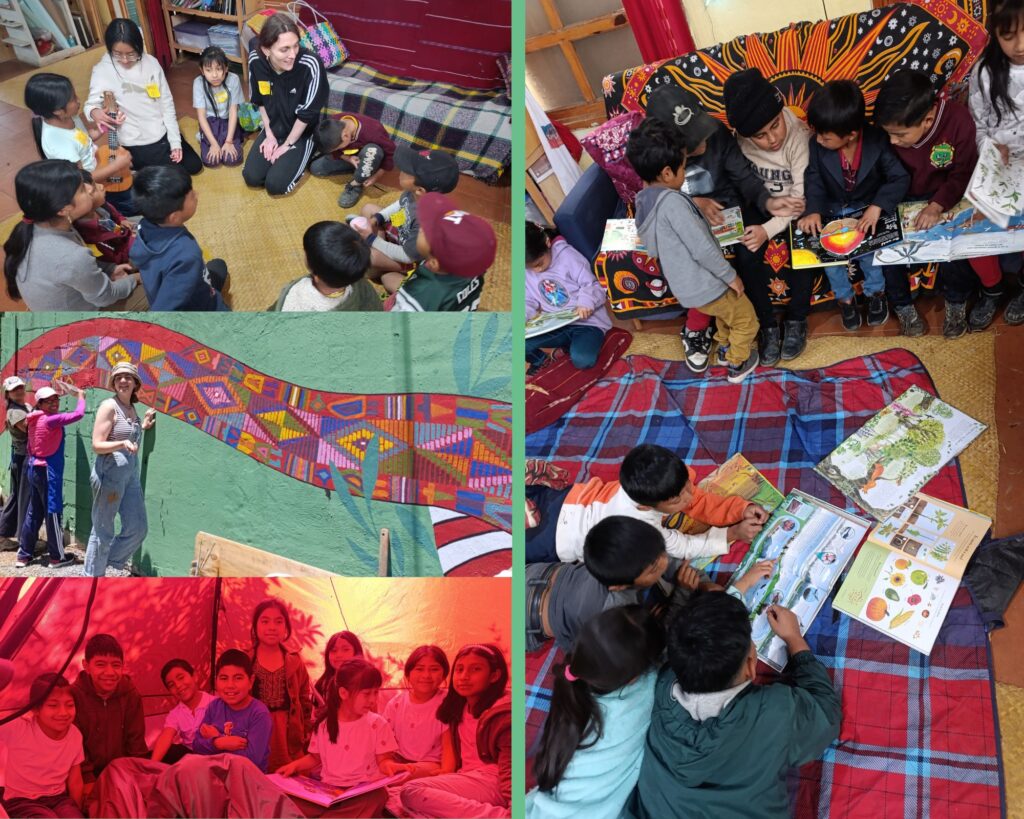
Checha and I then travelled to Guatemala’s colonial city, Antigua, for the Central American Eco-Education conference, where we presented on Casagua’s methods to engage children in arts and environmental education. It was a supportive and celebratory space, sharing ideas with other environmental educators from Guatemala, Costa Rica, Nicaragua and Mexico at the beautiful Antigua Green School campus. We are delighted to be part of this small but committed community ensuring that children and young people in Central America are able to learn about and appreciate our region’s bountiful and vulnerable ecosystems.
In March, we celebrated International Women’s Day. We listened to and read the lyrics of Mujer Indígena (Indigenous Woman), a rousing song by Guatemalan Maya Kaqchikel singer Sara Curruchich. We also listened to Fatoumata Diawara from Mali and talked about African musical traditions. The children had a lot of questions about Berta Cáceres, indigenous Lenca environmental defender who was killed for protecting the rivers of her territory in Honduras in 2016.
Water defence and protection is one of our central themes here at Casagua. We are now in formal partnership with our town’s Municipal Office for Water and Sanitation, who have given us the keys to the piece of land up the hill from our house where the water source bubbles from the mountain. This part of the mountain used to be open access for all, but the municipality now keeps it under lock and key so that illegal deforestation doesn’t impact the water supply. When we go with the children, they run laughing and shouting between the alder trees, which incidentally were planted in July 2019, the same month I arrived here from Scotland. Some of the children live just a few hundred metres from these mountain paths but have never explored the trees or ventured beyond the last line of cement homes and roads of this rapidly urbanising town. Their joy at being in woodland and touching bark and leaves is visceral and moving. On the International Day of Water, they were also able to share their wisdom and enthusiasm about the hydrological cycle during a special interactive presentation with members of the municipality and the water office.
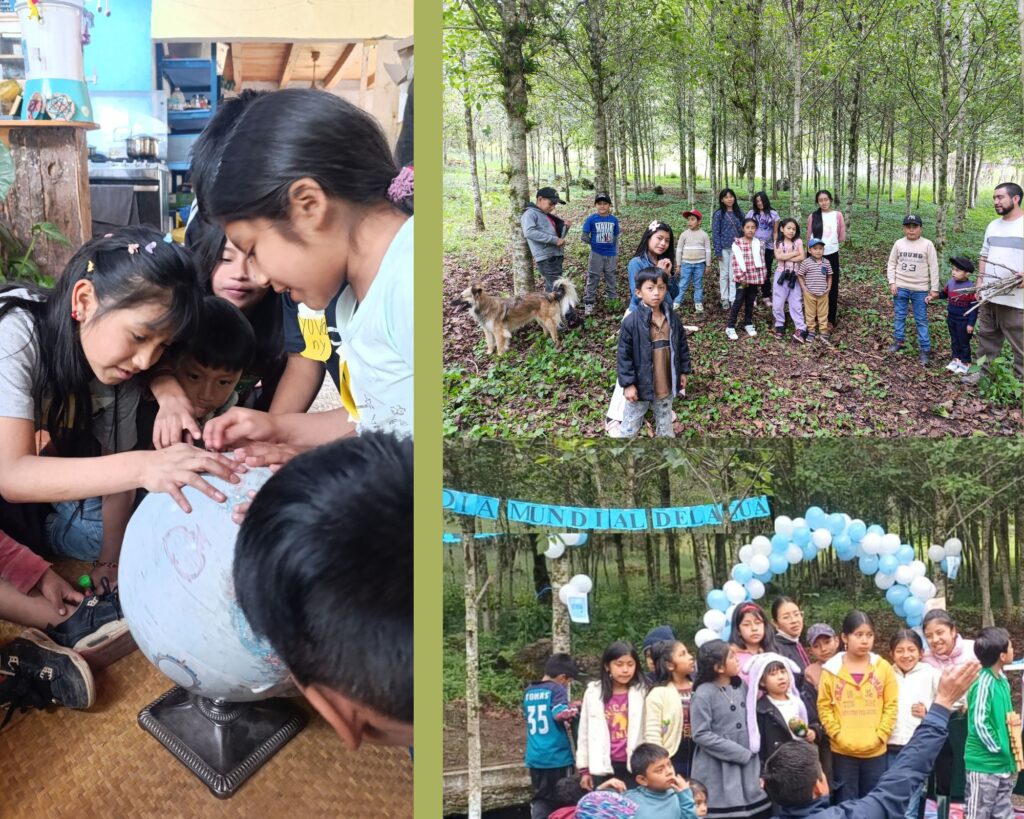
In April, Noemi, Jiska and Thomas came from Italy via Peru and Holland via Mexico and helped us to plan the garden and plant herbs, fruit and vegetables as well as do arts and crafts and cooking together. Their enthusiasm inspired us and, as ever, we felt grateful to continue developing Casagua as a welcoming community space.
April 23rd marks World Book Day and we were glad to share on social media some of our favourite educational books at Casagua, including Dorling Kindersley’s Los Ciclos de la Naturaleza and Usborne’s Look Inside Our World lift-the-flap book! We’re keen to share more snippets of life at Casagua via our Instagram account, so please do check out our World Book Day publication and others there.
It feels important to end this blog by marking May 10th and its significance locally and globally. The date marks Mothers’ Day in this and other parts of the world, a day to think of care and coming together, of nourishing and sustaining, of origin and belonging. Beyond one day in the year, Mothers’ Day is surely every day and Checha and I are certainly grateful to our mothers for their daily presence, love and wisdom! We think of Palestinian mothers in Gaza and so many other parts of the world where women and children, mothers and babies, sisters and aunts, are suffering and in danger due to violence and disaster.
In Guatemala, May 10th also marks the anniversary of the 2013 genocide conviction, in which former military dictator José Efraín Rios Montt was sentenced for genocide against the Maya Ixil people here in Nebaj and neighbouring Chajul and Cotzal. From 1981-1983, forced displacement and horrendous violence characterised life in the Ixil Region for the grandparents, neighbours and families of the children who come to our Casagua workshops. Checha was born during this time and he too remembers being a child amidst the fraught normalisation of violence and the exercising of lethal military power.
Children desperately need safe places to learn and play, creative spaces to explore and discover. Wouldn’t it be wonderful if we could create together a world where children can grow and thrive amidst abundant gardens, in creative play and carefree liberation? Let’s try!